Global Diversity and Inclusion Lab

Global Diversity and Inclusion LabGlobal Diversity and Inclusion LabGlobal Diversity and Inclusion Lab
Home
Pedagogic Frameworks
Services
Blog
Podcast
Book Store
Current Projects
About
Public Engagement

Global Diversity and Inclusion Lab

Global Diversity and Inclusion LabGlobal Diversity and Inclusion LabGlobal Diversity and Inclusion Lab
Home
Pedagogic Frameworks
Services
Blog
Podcast
Book Store
Current Projects
About
Public Engagement
More
  • Home
  • Pedagogic Frameworks
  • Services
  • Blog
  • Podcast
  • Book Store
  • Current Projects
  • About
  • Public Engagement
  • Sign In
  • Create Account

  • Bookings
  • My Account
  • Signed in as:

  • filler@godaddy.com


  • Bookings
  • My Account
  • Sign out

Signed in as:

filler@godaddy.com

  • Home
  • Pedagogic Frameworks
  • Services
  • Blog
  • Podcast
  • Book Store
  • Current Projects
  • About
  • Public Engagement

Account

  • Bookings
  • My Account
  • Sign out

  • Sign In
  • Bookings
  • My Account

A Work Developed by Global Diversity and Inclusion Lab

Phase 1

Phase 1

Phase 1

Mapping Student Assets (Identity/Assets + Access)

Objective: Recognize and document the individual, community, and sociolinguistic strengths students bring to school.

  • Activities:     
    • Asset Mapping Journals:  Students create multimodal self-portraits (drawings, videos, word  clouds, podcasts) highlighting their identities, interests, family traditions, and language practices.
    • Community Knowledge Circles: Small group sharing sessions where students introduce cultural practices, community heroes, or neighborhood resources.
    • Sociolinguistic Mapping: Students chart the languages/dialects they use across different spaces (home, peers, online, school).
  • Research Data Collection:     
    • Student reflections, artifacts (maps, journals, videos), teacher field notes.

Phase 2

Phase 1

Phase 1

Building Inclusive Practices (Inclusion + Connections)

Objective: Expand opportunities for students to express learning in multimodal and  culturally sustaining ways while connecting to the broader school-based disciplinary discourse.

  • Activities:     
    • Multimodal Learning Projects: Students communicate and deepen their learning using diverse modalities—such as bilingual posters, podcasts, and digital stories—to express meaning, voice, and understanding.
    • Asset Showcase Day: Families and community members are invited to share expertise, cultural traditions, or advocacy work with the school.
    • Curricular Infusion: Teachers co-design units with students to include local community narratives, cultural knowledge, and multilingual resources.
  • Research Data Collection:     
    • Documentation of classroom projects, teacher-student co-reflections, family/community feedback.

Phase 3

Phase 1

Phase 3

Co-Learning and Translanguaging (Co-Learning + Decolonization)

Objective: Create spaces where teachers and students co-learn, exchange perspectives, and disrupt deficit ideologies.

  • Activities:     
    • Translanguaging Practices: Students use multiple languages and modes in projects, with teachers modeling acceptance and learning from them.
    • Perspective-Sharing Workshops: Students and teachers swap roles (e.g., students teach teachers about gaming slang, heritage stories, or community issues).
    • Critical Reflection Dialogues: Small-group discussions on language hierarchies, microaggressions, and representation in curriculum.
  • Research Data Collection:     
    • Audio/video recordings of workshops, coded reflections, pre/post surveys on belonging and voice.

Phase 4

Phase 4

Phase 3

Collaborative Critical Inquiry

Objective: Empower students to connect classroom learning to real-world social, political, and environmental issues.

  • Connecting Classroom Learning to Social Issues: Link disciplinary content to broader societal challenges, fostering relevance and critical awareness.
  • Community Dialogues: Invite local activists, nonprofit leaders, or family advocates to share experiences and perspectives.
  • Research & Data Collection: Maintain student research logs, community partnership notes, and student-produced media to document findings.
  • Data Engagement & Critical Analysis: Examine collected data from disciplinary learning and community asset mapping, identify gaps, biases, and silences, and ask critical questions about representation, methods, and whose voices are absent.

Phase 5

Phase 4

Phase 5

Culminating Action Project (Identity/Assets → Social Justice → Connections)

Objective: Students collaboratively design and implement an action project that  addresses a chosen issue, mobilizing their assets and multimodal skills.

  • Examples of Possible Projects:     
    • Organizing a community event or awareness campaign.
    • Launching a bilingual podcast series amplifying youth voices.
    • Designing an art installation on campus addressing equity and inclusion.
    • Creating advocacy toolkits (videos, flyers, social media campaigns) for community distribution.
  • Research Data Collection:     
    • Documentation of projects, student reflections, community feedback surveys, researcher field notes.

Phase 6

Phase 4

Phase 5

From Reflection to Transformation

Objective: Students, teachers, and community partners engage in collective reflection circles on the process.
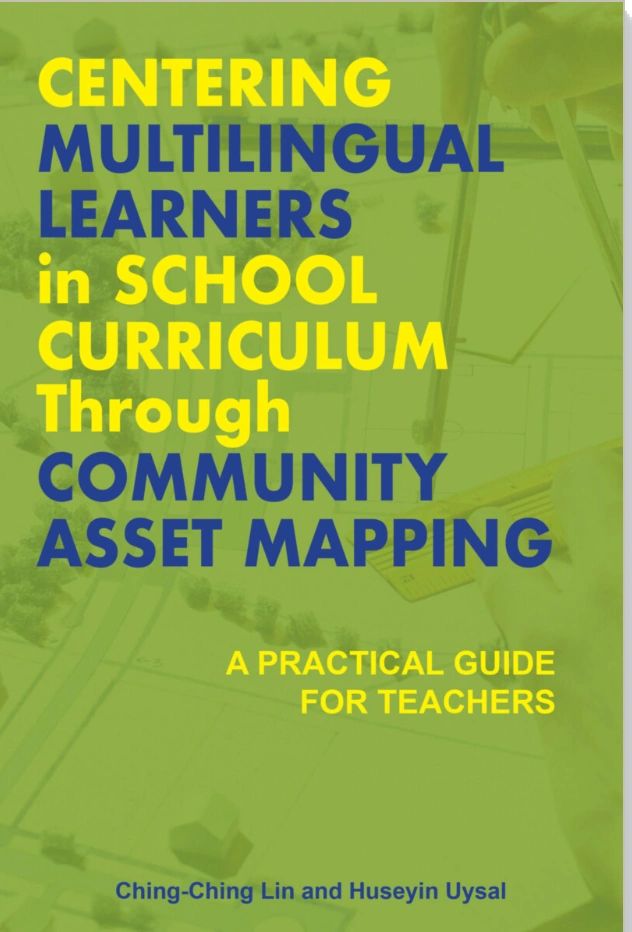
  • Researchers and stakeholders analyzes how each principle  (Identity/Assets, Access, Inclusion, Connections, Co-Learning, Social  Justice, Decolonization) manifested in practice.
  • Findings are shared with the broader school community to inform ongoing improvement and sustainability.

Community Asset Mapping (CAM) as a pedagogical framework

Community Asset Mapping (CAM) is a justice-centered pedagogy that honors students’ intersectional lived experiences as vital resources for learning and social transformation. 

Find out more

Courses and Professional Learning

Courses offered at Udemy

 Course offerings that provide pedagogical and curricular  frameworks for community-based and asset-oriented approaches to  education, with a focus on identity, agency, community knowledge, and  student voice.  

Click here for more details! 

Copyright © 2026 Global Diversity and Inclusion Lab - All Rights Reserved.

Powered by

This website uses cookies.

We use cookies to analyze website traffic and optimize your website experience. By accepting our use of cookies, your data will be aggregated with all other user data.

Accept